


Art, Mental Illness, and Provocation: A look through the unforgiving lens on Kanye West
Written by: Ryan DeLeva
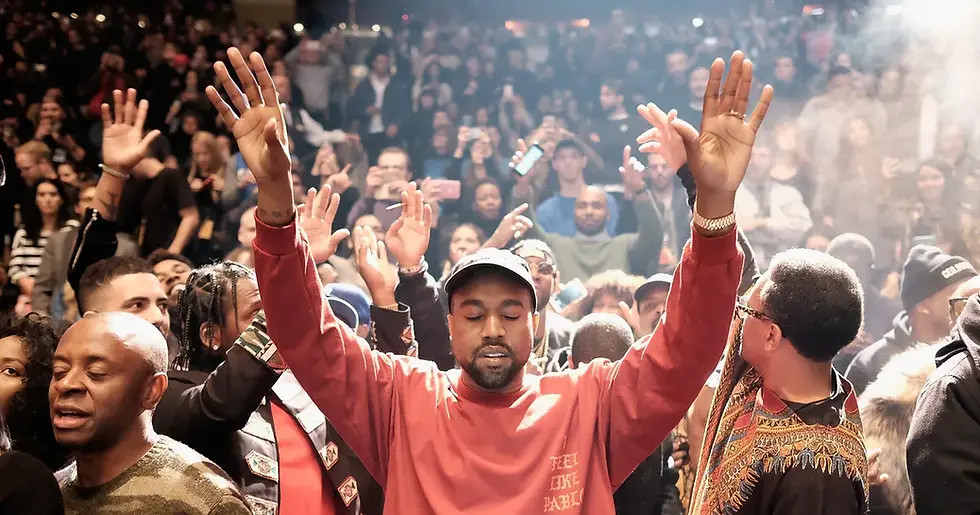
Ye (fka Kanye West) is arguably one of the most influential and infamous artists of our generation. Unfortunately, he has repeatedly used his influence to spread hate. But living in a culture where rappers are often uplifted for their gang affiliations and the criminal lifestyle that accompanies them, a difficult question emerges. Why do we choose to rally behind those who have committed tangible, violent crimes, while simultaneously mobilizing to ostracize those whose offenses are limited to hateful rhetoric?
Whether he is launching a collaboration with Balenciaga or spearheading the "Donda West" Law in California, signed by governor at the time, Arnold Schwarzenegger, it is clear that Ye moves with an ambition and drive that few possess. His reach is undeniable, receiving praise and recognition from musical icons such as Michael Jackson, Prince, and Paul McCartney. Elton John in particular stated, “He’s a stone-cold genius. He’s like Miles Davis meets Frank Zappa. ‘808s & Heartbreak’ is the sexiest record since ‘What’s Going On.’” His list of achievements is endless, but unfortunately, so is his ego.
To preface, the notion that all or most rappers are gang members, murderers, drug dealers, or criminals is an extremely harmful stereotype, one historically weaponized to marginalize African American artists and diminish the cultural impact of their work. However, it is equally important to acknowledge that the rap community, and at times the artists themselves, often romanticize gang culture in ways that create problematic ideals for the community, especially younger fans who want to be like their favorite artists.
Take Christopher Daniel Soriano Jr., better known as CJ, for example. CJ’s breakout song “Whoopty” was an immediate hit in the New York drill scene. The music video for Whoopty showcased gang imagery through the use of hand signals and red bandanas throughout. After the song reached its peak popularity, it was revealed that CJ lacked actual gang affiliations and was simply acting for his music video. CJ faced intense backlash, and his popularity faded, effectively making him a one-hit-wonder. After being disillusioned by his lack of real gang affiliation, people simply stopped caring for CJ, as if they only cared for the image and not the music.
This focus on promoting or excusing criminal activity also extends into how the public reacts to incarcerated rappers. Free TayK, Free Melly, and Free Kay Flock are all sentiments heard and spread through members and fans of the rap community, yet all three of these men are in jail for gang-shooting or murder charges. While the prison system is horribly flawed and needs a large reform to make it a place of genuine rehabilitation instead of the labor-driven modern-day slavery that it is, people need to see how damaging these sentiments can be. To vocally advocate for freeing people who make songs bragging about and glorifying what they’ve done instead of showing remorse, is damaging towards the image of their communities and especially hurtful to the victims and their families.
If we are going to be so vocally supportive of people based on their gang affiliations, it then becomes entirely unfair to ostracize someone else within that same community for saying hateful things. Two wrongs do not make a right but if you are going to support people who have actively had a hand in taking another person's life, then to rally against anyone who does anything less than that is outright hypocritical.
Despite this, I do not believe Ye should be welcomed back onto any stage he chooses. While I genuinely want to see him thrive in his mental health and perform for the world again, that desire does not warrant public forgiveness. The hate and prejudice he has spread can be as damaging as the promotion of gang imagery. When a young fan hears someone they idolize patronize their community, it can leave them feeling dejected and hurt. Ye does not deserve universal forgiveness, no one does, but he does deserve proper help, something that the industry deprives him of.
I interviewed two people, Andrew who is a fan of Ye and Dana who has voiced her distaste for him very vocally. Despite differing opinions on Ye as a person, they both agreed that he deserves treatment and help rather than attacks against him, with Dana saying “I hate him, I really do. I will never support him or what he stands for but the man needs help, and I hope that he can find a support system that helps him become a better person.” Even if you despise someone, it is still important to show them the compassion that all people deserve.
To be clear, the rhetoric Ye has used is abhorrent, there is no debate there. But labeling his words as "evil" does not mean he is unworthy of help. Instead of addressing the mental health crisis at the root of his behavior, society chooses to amplify his outbursts by sharing it online, further feeding the cycle. While it is up to every individual to be their own person and find help for themselves when they realize they need it, Ye was in a position where he could not help himself due to the people around him egging on his illness for personal gain.

Even when Ye sought professional help, the industry failed him. During a time when Ye was trying to stay on medication and in therapy to repair his relationship with his family and fans, he began seeing a personal trainer named Harley Pasternak, at the recommendation of the Kardashian family. After deciding that Harley was not the help he needed, he split off from him, but eventually Ye claimed that he was being followed by Harley, even providing photos of him lurking in his hotel lobby. After more time passed, a text message between the two surfaced online with Harley telling Ye he has two options going forward, with the second option being “ I have you institutionalized again where they medicate the crap out of you, and you go back to Zombieland forever. Play date with the kids just won’t be the same" This constant cycle of mistreatment can never help someone truly get better, and celebrities everywhere deal with this, all while the people doing this to them spout how much they support mental health awareness.
The culture surrounding celebrities is predatory, often fueling the very decline in mental health it claims to care about. Too many artists have struggled while their crises were treated as punchlines or commercial opportunities. Amy Winehouse and Kurt Cobain were both treated as tools for public enjoyment and forced to tour till their untimely deaths, Kid Cudi and Whitney Houston were both mocked in tabloids for their mental health, and people love to joke about “pulling a Britney Spears” and shaving their heads. We preach mental health awareness, but that compassion seems to evaporate the moment the person in question is famous.
Ye is a deeply troubled person, he grew up knowing his father wanted him aborted, he blames himself and his fame for his mother’s death, and he was molded by severe mental illness and the toxic environment of Hollywood. Understanding all of this does not erase the harm he has done but calls for a deeper understanding of his mental health. Accountability and compassion are not mutually exclusive. We can hold Ye responsible for his words while acknowledging that the system that made him like this is the same system holding him back from true help.


Comments