


Inside the Reality of Working in Behavioral Health
Written by: Taylor Wolfe
The phone could ring at any hour. A patient in crisis, a family searching for answers, a staff member needing guidance: unpredictability was part of the job. For six years, Kathleen Wolfe worked as the Director of Behavioral Health at Visiting Nurse Service of New York, one of the largest home and community-based healthcare organizations in the country. She spent her days helping people through some of the most difficult moments of their lives.
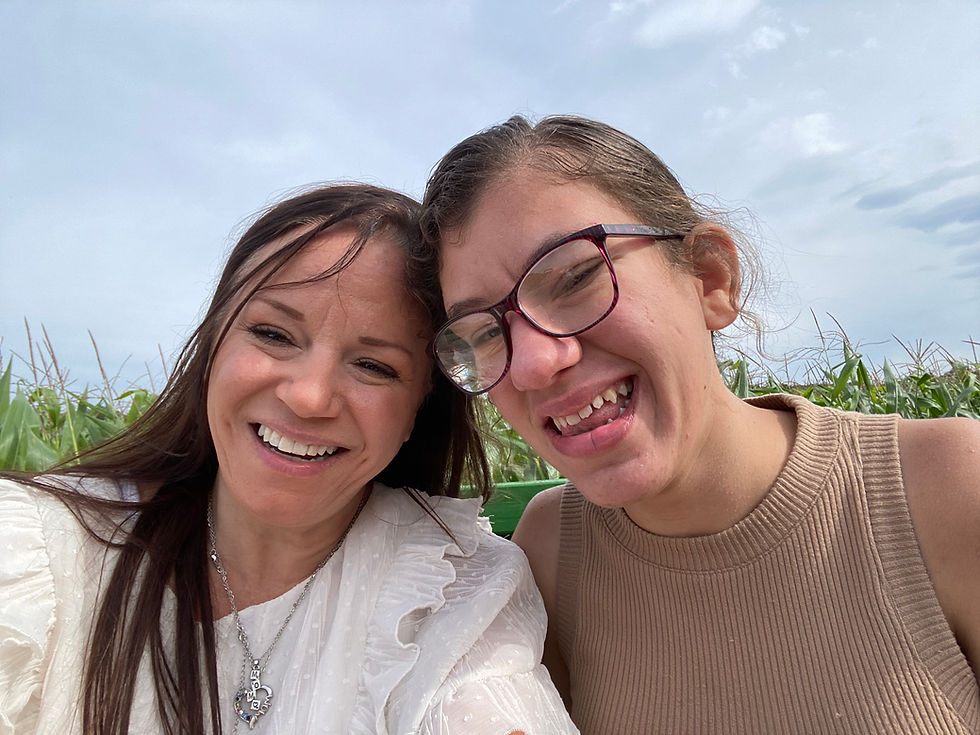
The photographs in this presentation are shown in chronological order to reflect different stages of Kathleen Wolfe’s life and career. The first image features Kathleen before her time at Visiting Nurse Service of New York with her child and niece; the second was taken during her years working at VNS, and the final image shows Kathleen in her current role.
Behavioral health is a field that many people misunderstand, assuming it only involves therapy or hospitals. The reality is far more complicated. Wolfe explained that the work requires leadership, quick thinking skills, empathy, and resilience. “You need to learn how to stay calm when everyone else is overwhelmed,” she said. “People look to you for answers during some of the most challenging moments in their lives.”
For Wolfe, the path into behavioral health was not something she had initially planned. Early in her career, she worked in a group home as a social worker before becoming a therapist. Over time, she developed a passion for helping vulnerable populations and realized she wanted to take on a leadership position where she was able to improve larger systems of care. She eventually became the Director of Behavioral Health at VNS.
According to Wolfe, one of the biggest misconceptions about behavioral health is that the work “only focuses on diagnoses or treatment plans.” She described the job as “deeply human.” “Every person has a story,” she explained, “A lot of times, people are dealing with situations that are completely out of their control.”
Her position had many responsibilities, far more than just supervising a department. She managed a team of nurses, coordinated care during patient crises, and made hard administrative decisions that impacted both her patients and staff. Some days were full of meetings, paperwork, and policy decisions, while others involved crisis management. Wolfe explained that unpredictability became normal over the years. “There were definitely days where you’d walk in thinking you had a plan,” she said, “and then you didn’t within the hour.”
Working in behavioral health also meant facing emotionally difficult situations. She explained that one of the hardest parts of the profession was knowing that not every situation had a perfect outcome. “You want to help everybody,” Wolfe said. “But sometimes the best you can do is make sure someone feels supported and safe in that moment.”
Wolfe said that emotional exhaustion and burnout are extremely common in behavioral health professions because the workers are constantly absorbing the stress and trauma of others. Wolfe not only had to support her patients, but also her employees who were struggling after difficult cases. "You gotta learn how to take care of your staff too. The people helping others shouldn't be overwhelmed."
Despite these challenges, Wolfe states that her work is deeply rewarding. One of the most significant moments in Wolfe’s career was when she helped implement the 988 crisis hotline system. It is a nationwide mental health emergency number. Before 988 existed, many people in mental health crises had limited options. Wolfe explained how the introduction of 988 was the start of a major shift in how behavioral health crises were handled. “When people are in a mental health crisis, they need a response that is centered around empathy and de-escalation,” Wolfe said. “988 was created to make it easier for people to reach help quickly.”
Long before mental health conversations became normalized publicly, Wolfe spent time working directly on a suicide prevention hotline. “That experience is exactly why 988 mattered so much to me,” Wolfe explained. “That kind of work changes you,” she said. “Once you’ve heard those calls, you understand how important it is to show up for people.”
Attitudes surrounding mental health have shifted over time. When Wolfe first entered the behavioral health field, conversations about mental health issues were often stigmatized. Today, she believes more people are willing to discuss their struggles and seek support. However, she explained that there is still progress to be made, especially when it comes to accessible and affordable treatment.
Wolfe also emphasized that behavioral health work requires strength, patience, and adaptability because no two cases were exactly alike. She described how behavioral health professionals frequently worked alongside families, doctors, social workers, community organizations, and more in order to provide patients with the support they need. According to Wolfe, collaboration is the key part of the profession because mental health affects every aspect of a person's life: relationships, employment, housing, physical health, and more. She also mentioned that the recent COVID-19 pandemic brought attention to behavioral health challenges across the country as more people experienced anxiety, grief, isolation, and burnout.
Although Wolfe no longer works directly in crisis response, she remains involved in behavioral health. Now, she works in a corporate position focused on ensuring large companies provide adequate mental health insurance coverage and resources for their employees. While the pace is less chaotic, Wolfe said, “the work is still demanding in its own way.” Rather than helping individuals just one crisis at a time, she now works on improving systems that impact thousands of employees and their families. "The work is different now," Wolfe said, "but it still comes down to helping people feel supported." Looking back on her career, Wolfe remains proud of the work she accomplished. From helping implement 988 to supporting patients and teams through crises, she believes behavioral health work has the power to change lives. When asked what advice she would give to someone entering the field today, her answer was simple: “You have to care about people. That’s the center of everything.”


Comments