


Fuel for Thought: Rising Gas Prices Leave Drivers Paying at the Pump
Updated: May 25
Drivers face unpredictable pump costs that are reshaping how people commute, plan errands, and manage their weekly budgets.
Written By: Taylor Wolfe
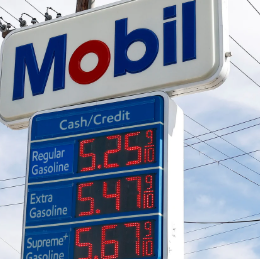
Every swipe at the gas station feels a little more dramatic these days as drivers across Nassau County (and the nation) watch prices climb faster than the summer heatwave thermometer. What used to be a routine fill-up has turned into budgeting, mild panic, and strategic driving, as gas prices reshape daily life one expensive gallon at a time.
The Price of a Ride
Across Long Island, these rising gas prices are hitting commuters who rely on their cars to get through daily life. From early morning drives to late-night grocery runs, the cost of transportation seems to keep going up. The issue is everywhere: from suburban counties such as Nassau and Suffolk to busier urban areas such as Queens and Manhattan. Drivers pulling into stations from Sunrise Highway to the Jackie Robinson Parkway are all seeing the same thing; numbers on the pump that seem to shift just a bit too frequently.
Over the past few months, prices have fluctuated and steadily increased, leaving people feeling concerned every time they drive. While gas prices always had some sort of variability, the current trend has made budgeting for gas a serious concern in many households. The reasons behind the rise in gas prices are complicated. From Global supply chain issues, fluctuations in crude oil production, geopolitical issues, to seasonal demand, it seems like anything and everything could contribute to why you’re spending so much at the pump. However, for the average person, the explanation isn’t nearly as important as the result.
“I Used to Not Even Look at the Price”
This shift in prices has changed behaviors. “I used to not even look at the price,” said Hayley, a student at Molloy University. “Now I literally check the sign before I even pull in. I even compare stations to see who is ten cents cheaper.”
That mindset is becoming increasingly common, especially among students who commute daily. Paying for gas was once a given, automatic part of driving. Now, it’s strategized.
Another driver described the emotional and economic aspect of watching the prices climb. “It feels like it goes up overnight,” said Dennis, a nurse at Cohen’s Children’s Hospital. “One week I think I budgeted okay, and the next week I’m shifting my bank account just to make sure I can fill up my tank.”
Gas prices are no longer just an inconvenience. They are a serious economic problem.
The Effect on Daily Life
These rising gas prices do not just affect how people spend their money at the pump. They influence how they spend their money the entire week. Some residents comment that they are completing their errands all in one single trip to Walmart instead of making multiple stops to different locally owned businesses. Others have noted that they are carpooling more frequently or choosing public transportation when possible. Even small, harmless decisions like choosing to drive across their town for dinner now come with an extra layer of consequence. “I definitely think twice now,” said local college student, also named Dennis, “If I spent money on gas this week, I’m not just gonna drive around for no reason. That adds up quick.”
For families, the impact can be even more astonishing. Parents juggling school drop-offs, work commutes, sports practices, and errands are becoming increasingly aware of how quickly the fuel costs accumulate. “I feel like I’m always at the gas station,” said Jody, a parent in Merrick. “Every time I go, it’s a little more expensive.”
Why Prices Keep Moving
Experts point to several overlapping factors that contribute to these rising fuel prices.
A major reason prices are so high right now is uncertainly toward the global oil flow through the Strait of Hormuz, one of the world’s most important shipping routes for crude oil. According to the U.S. Energy Information Administration, about 20 million barrels of oil per day normally move through the strait, meaning even temporary disruptions can have a significant impact on global supply chains. In recent months, reports have shown periods of reduced traffic and shipping delays in the region, which keeps crude oil prices high worldwide, not just in New York.
Another big reason is because countries are drawing down oil reserves faster than they can be filled. Instead of having an extra supply, global gas inventories are shrinking. When storage is low, it causes a surge in demand, which causes a surge in pricing because there’s no “backup supply.”
There are also other factors behind the rise in gas prices, such as shifts in global oil trading, refinery maintenance schedules, transportation, and other economic factors, but if this article went on explaining every last detail, it might never actually end (and neither would your trips to the gas station, at this rate.) At a certain point, the “why” becomes less of a single answer and more of a long list of interconnected issues that all land in the same place: a higher number on the pump.
Community Adaption
As gas prices rise, communities across Long Island are adjusting. For many residents, the impact turned into changes in how they drive, plan, and spend. Though no singular solution solves the issue, local habits are helping Long Islanders deal with the rising costs.
One of the most common adjustments is carpooling. Students heading to campus and coworkers traveling into nearby towns are coordinating rides more often in order to split fuel costs. “I used to drive alone most days,” said Rachel, a student at Molloy University. “Now, if someone on my route has class, we carpool. It just makes more sense.”
Another growing trend is the use of fuel-tracking apps and price comparison tools such as GasBuddy. Drivers check their websites before filling up, and choose stations that are even just a few cents cheaper. While the difference may seem small, many have said it adds up over time. “I’ve definitely started checking prices on GasBuddy before I go anywhere,” said Jody, a parent in Merrick. “There are stations I completely avoid.”
Beyond individual habits, people also shared suggestions for broader solutions. One commonly mentioned idea is expanding the public transportation options on Long Island, especially more frequent and reliable train and bus services that would connect residential areas to major job centers. Many residents noted that while the LIRR exists, it is unreliable at times. “If public transportation were more flexible, a lot more people would use it,” said high school student Mckenzie.
While drivers across Long Island keep adjusting their routines to keep up with rising gas prices, the reality remains pretty unpredictable, and largely out of anyone’s control. From carpooling to checking apps like GasBuddy before every fill-up, residents are doing what they can to stay ahead of the numbers. Still, no matter how efficient the planning gets, one thing stays the same at the pump: as Dennis, a nurse at Cohen’s Children’s Hospital, put it, “We can adjust how we drive, but we can’t really adjust the price at the pump.”


Comments